Essays
-
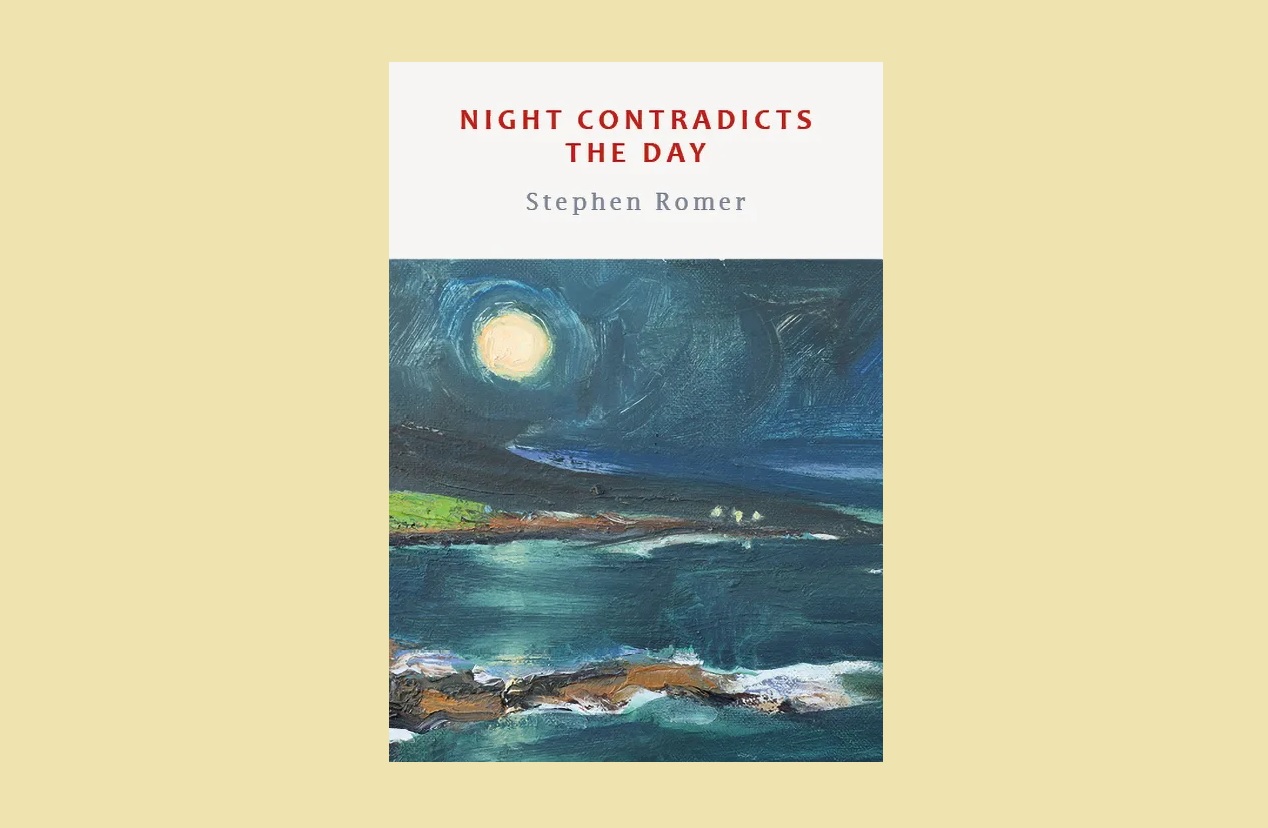
Carving Out Refuges: on Stephen Romer’s ‘Night Contradicts the Day’
Nicola Healey Stephen Romer’s Night Contradicts the Day (Dare-Gale Press, 2026) comprises just five poems yet has more power than many full collections. In this very moving, personal sequence of poems, the narrator holds careful vigil over an isolated loved one’s protracted mental suffering, whose fragile, volatile hold on life and equilibrium destabilises both…
-
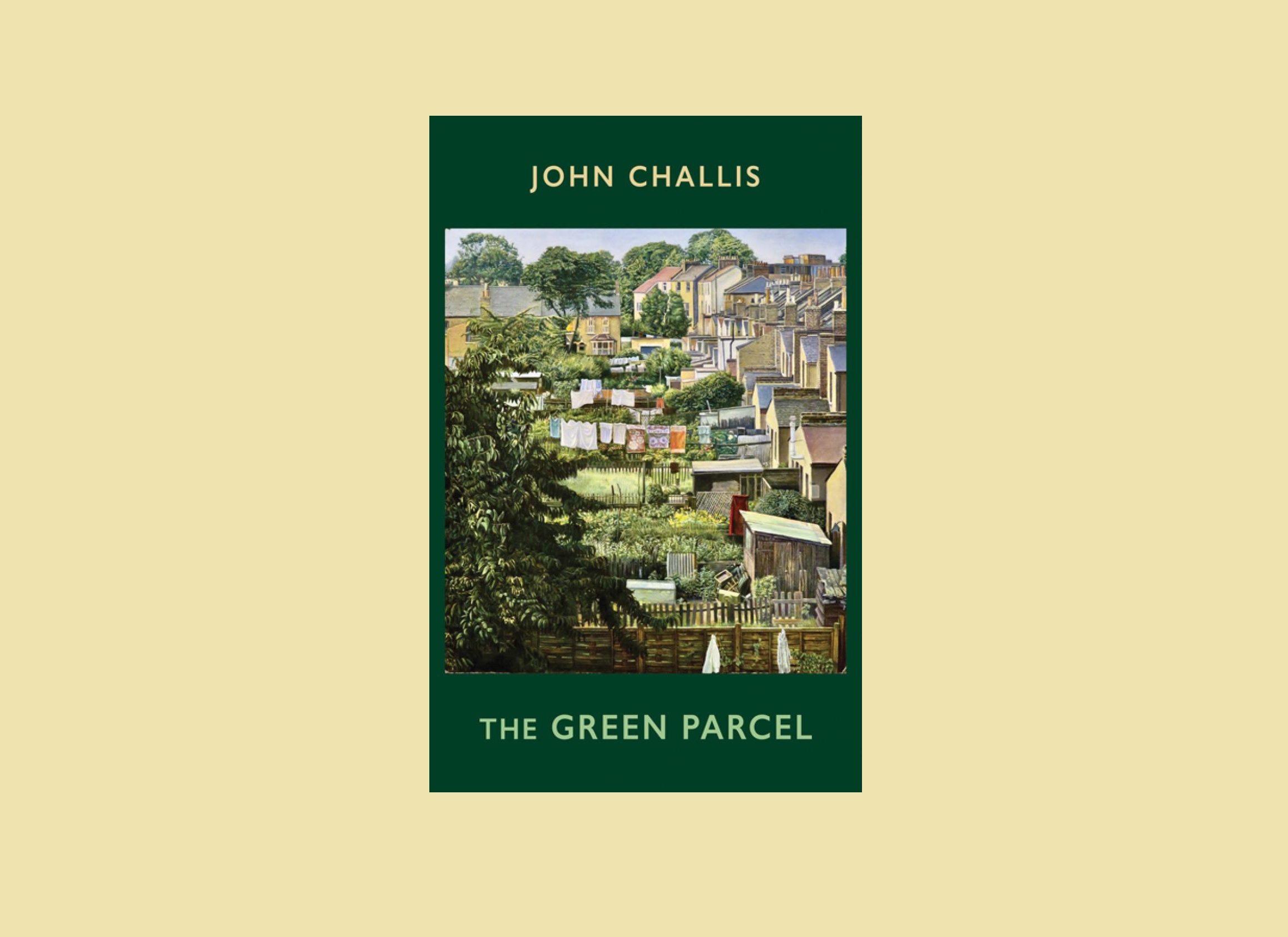
A Sacred Interest: on ‘The Green Parcel’ by John Challis
Patrick Davidson Roberts Having continued to get older to such a degree that I’ve stopped pretending I’m not taking it personally, and having moved house in the past year, the periodical time has come for a chucking-out of trash and a debunking of several aphorisms that are taking up space in my life that…
-
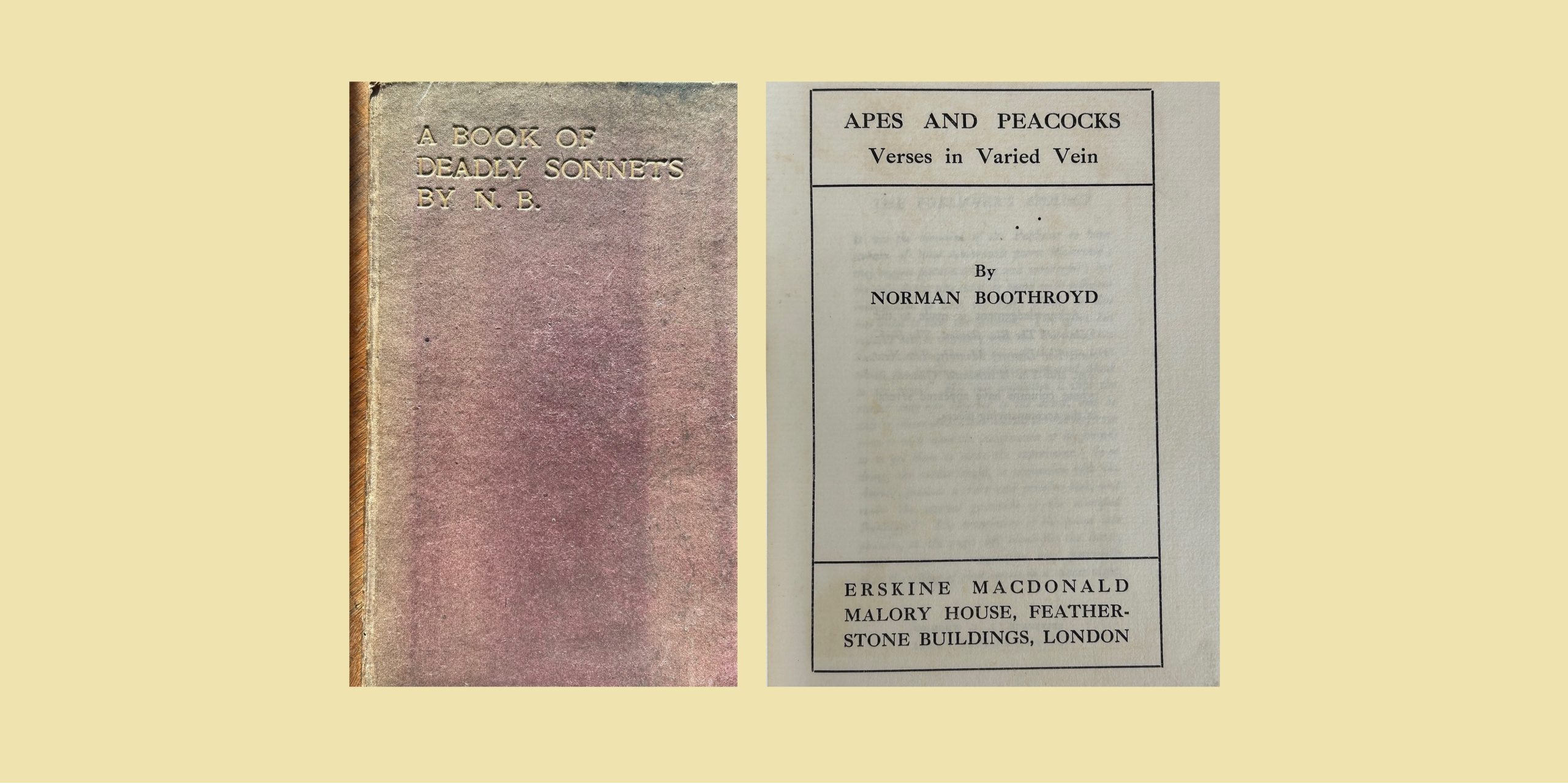
A Forgotten Edwardian Nonsense Poet: Norman Boothroyd
This essay is the latest in a series for Wild Court by Mark Valentine on obscure publications and poets lost to posterity, and rare books. The series can be found here. Mark Valentine In the vast emporium of the Richard Booth bookshop in Hay-on-Wye there used to be four of five high broad shelves filled to overflowing with…
-
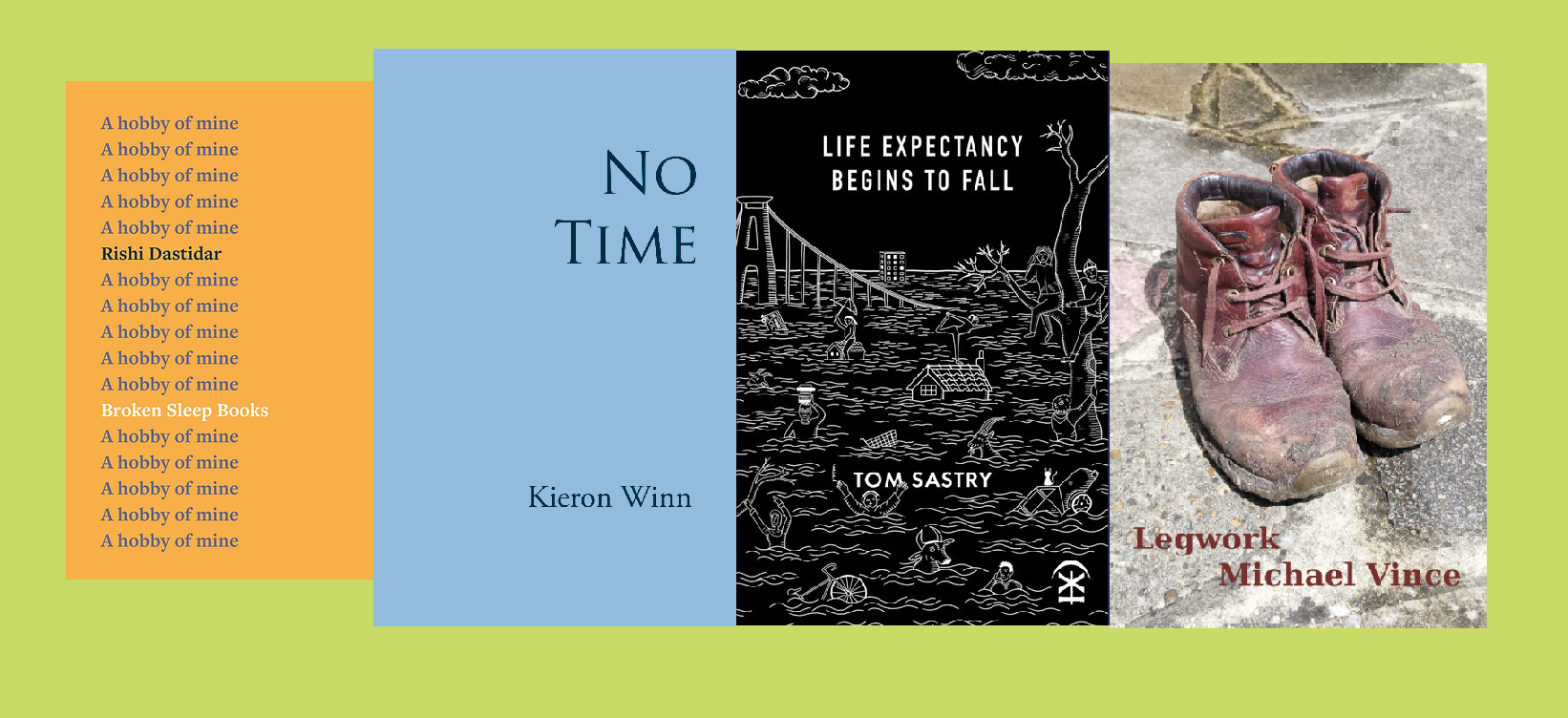
A Hobby of Existence: on Dastidar, Sastry, Vince, & Winn
Kevin Gardner According to the randomness of the laws of the universe, or at least of the postal service, I will occasionally receive by mail, in quick succession, review copies of poetry books that have very little in common with each other in terms of form and subject. My instinct is to treat them separately,…
-
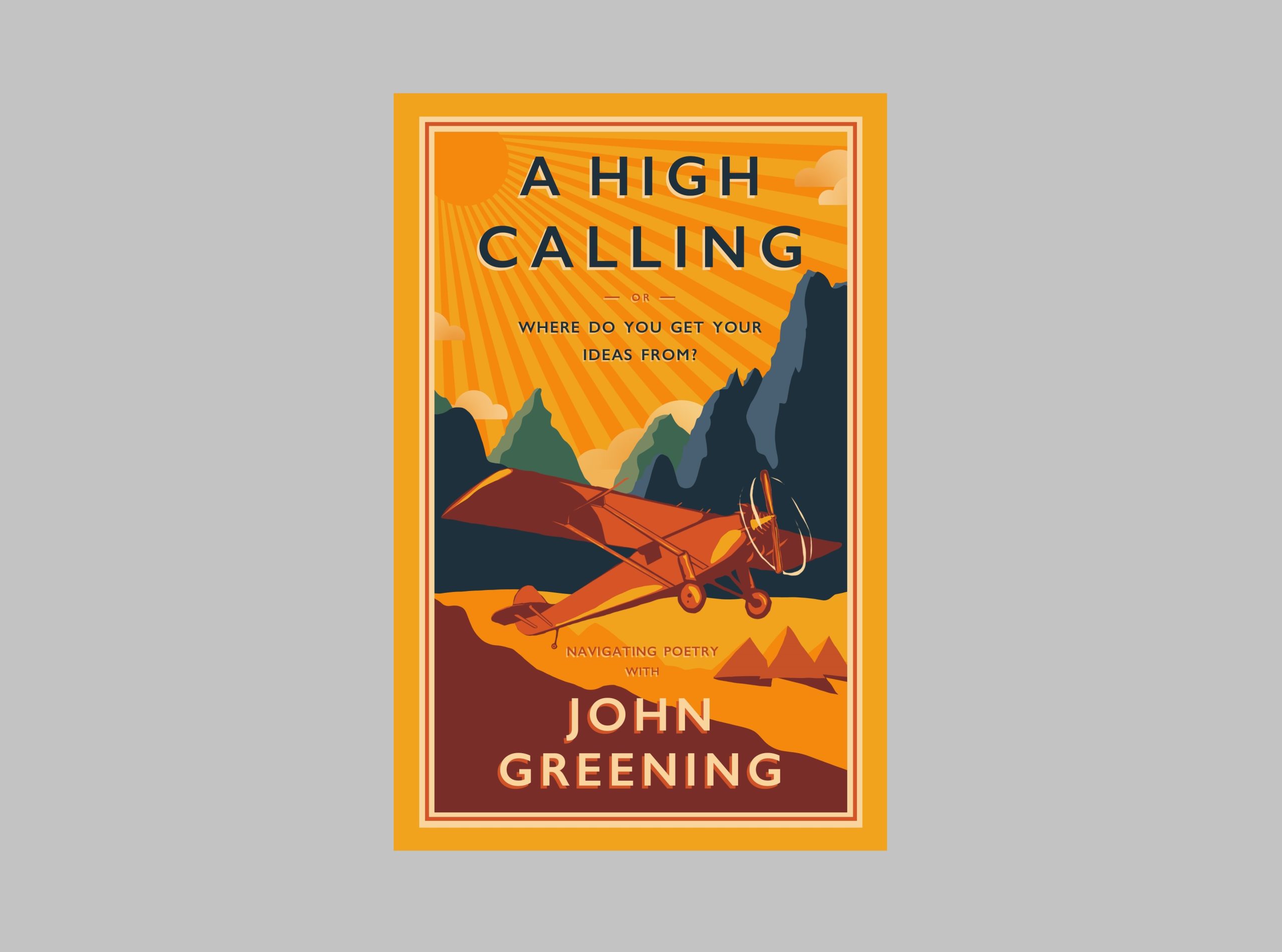
An extract from ‘A High Calling’ by John Greening
Below are two extracts from A High Calling (or Where Do You Get Your Ideas From?) by John Greening, recently published by Renard Press. Sharing what Greening has learnt during half a century’s creative work, A High Calling provides anecdotes and literary insights interwoven with autobiographical sketches and original poems. An online launch for the…
-
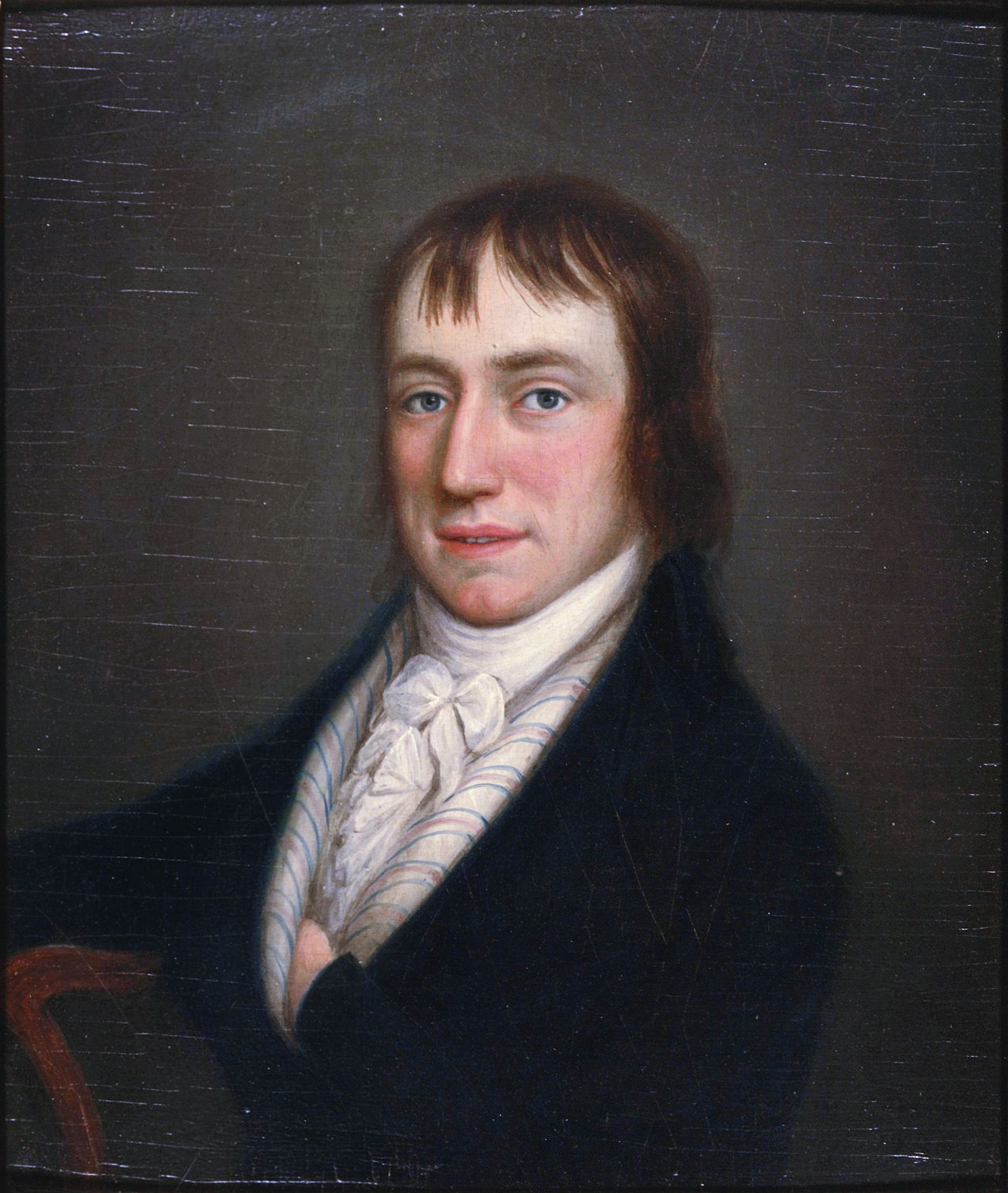
Losing ‘a sense sublime’: anosmia and poetry
William Wordsworth at 28, by William Shuter Nicola Healey Smell is arguably the poet’s sense, and the most poetic sense: it is the most mysterious, least understood sense; scent triggers buried memories (those magical Proustian bursts), so is a source of deep inspiration; a smell stimulates feeling, thought and vitality, acting on the brain more…
-
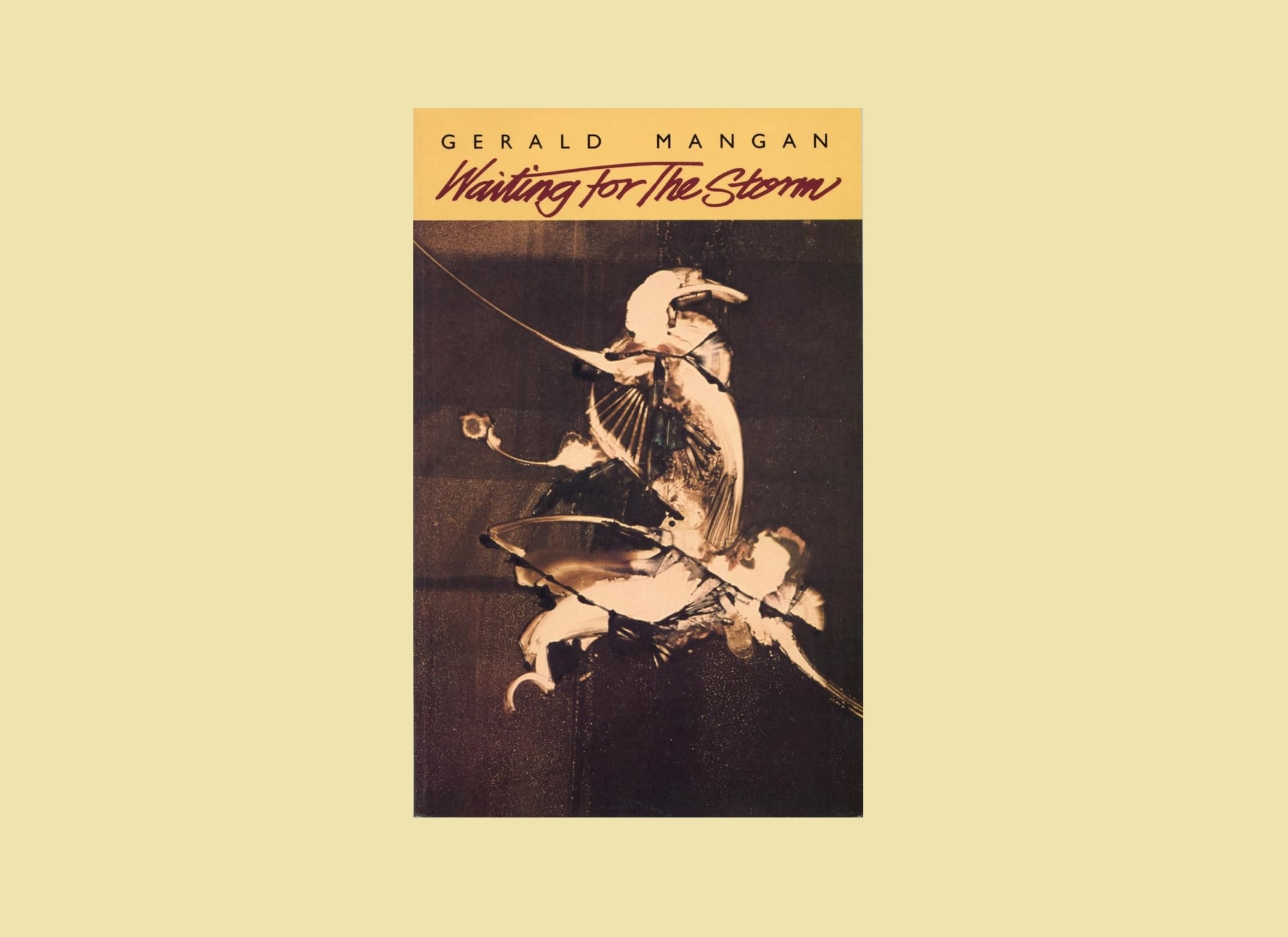
‘One of the best Scottish poets of his generation’? – On Gerald Mangan
Matthew Stewart How many individuals really do manage to produce outstanding work in more than one medium of the arts? Very, very few is the inevitable answer – but Gerald Mangan might well be one of them. Mangan, born in Glasgow in 1951, is known not only as a playwright and actor, but is also…
-

From the shires: on Greening, Richardson, Branfoot, Self, & Nevett
Kevin Gardner Contemplating the literary significance of Huntingdonshire, that county that no longer exists outside memory and imagination, John Greening was reminded of all the poets who left their mark, perhaps none more poignantly than John Clare. “Clare’s poems,” he writes, “conjure the particularities of these clustered Midland shires, what is at our feet, the…
-

‘In and out of time’: on Declan Ryan’s ‘Five Leaves Left’
By Nicola Healey Crisis Actor by Declan Ryan was my favourite poetry collection of 2023 – I wrote on it at length for The London Magazine in July 2023, where my main focus was Ryan’s boxing poems. There was one poem that I didn’t explore there – its sensitive subject matter was such that it…
-

Causes in time: on ‘Thom Gunn – A Cool Queer Life’ by Michael Nott
Andre Bagoo Michael Nott’s Thom Gunn: A Cool Queer Life (Faber, 2024) begins with the seed of an idea. Over the course of its 720 pages, that seed builds into an overwhelming crescendo. The idea, never stated but left to interpretation, is this: the death of Gunn’s mother by suicide when he was just 15…
-

U. A. Fanthorpe: The Watcher
To mark the publication of a new edition of the late U. A. Fanthorpe, Not My Best Side: Selected Poems (Baylor University Press), its editor John Greening shares his thoughts on one of the UK’s most popular poets. The essay is based on a talk given for the King’s Lynn Literature Festival in September 2024.…
-

Wit and wordplay: ‘After You Were, I Am’ by Camille Ralphs
Kevin Gardner Divided into three discrete units, Camille Ralph’s After You Were, I Am (Faber, 2024) transports the reader into a warped revisioning of the seventeenth century. The first section recasts poems, prayers and scripture into a ‘Book of Common Prayers’. The second section, ‘Malkin: An Ellegy in 14 Spels’, comprises a set of dramatic…
-

‘You must live through hell’: On Survivor’s Notebook by Dan O’Brien
Nicola Healey Survivor’s Notebook (Acre, 2023) interrogates the aftermath of Dan O’Brien’s recovery from cancer. A memoiristic sequence of prose poems, it forms a companion to Our Cancers (Acre, 2021; reviewed by Wild Court here), which recorded how O’Brien and his wife, Jessica St. Clair, both developed cancer in close succession – possibly due to…
-
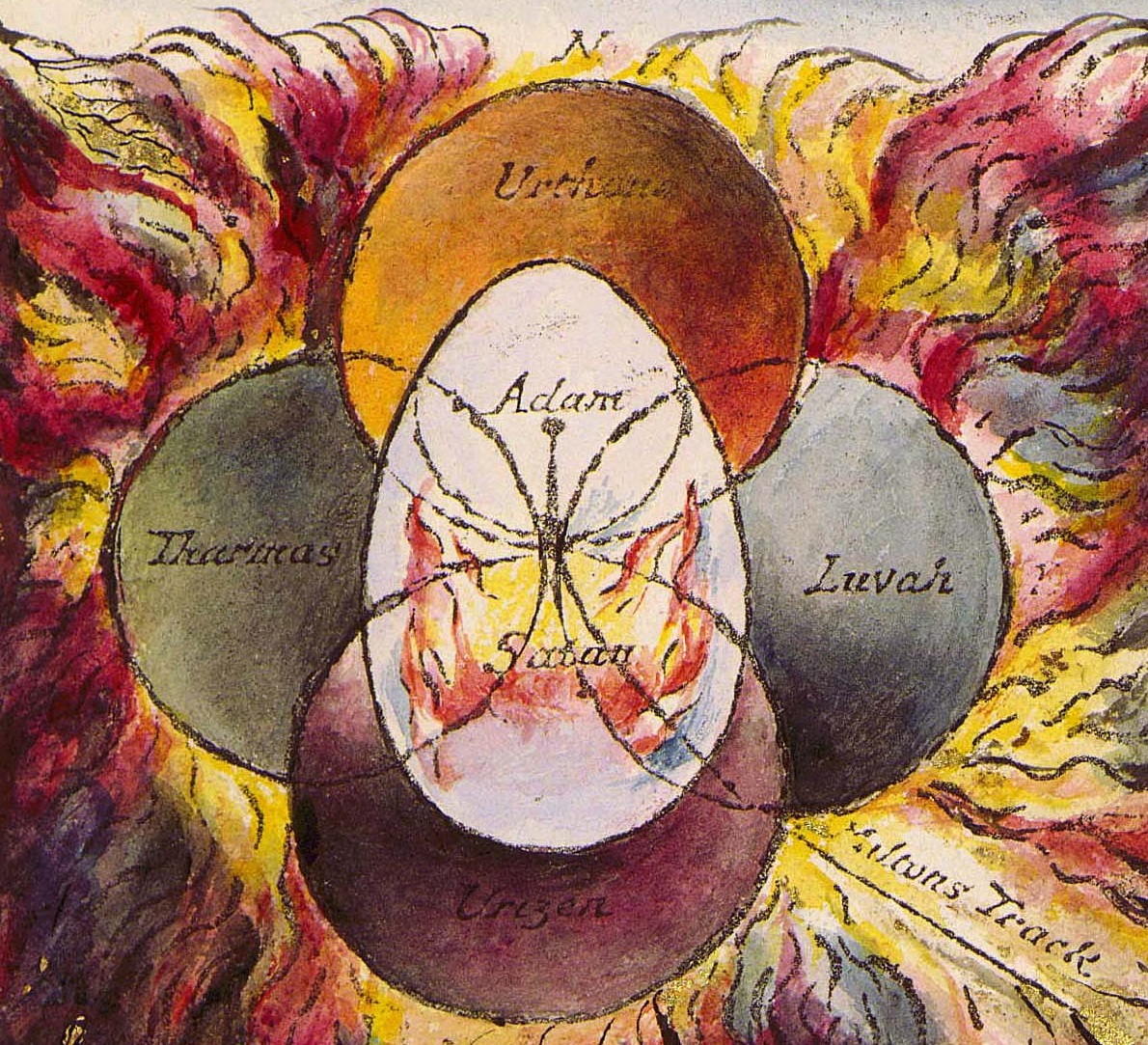
Blake’s Poetic Insight into Splitting of the Ego in ‘The Four Zoas’
From a plate in Blake’s ‘Milton: A Poem’, depicting the relationship of the Four Zoas Dr Emily Bilman The purpose of this essay is to demonstrate the precocious development of William Blake’s intuition which enabled him to anticipate and write about the conflicts that the unconscious processes of anxiety, melancholia, and splitting caused on his…
-
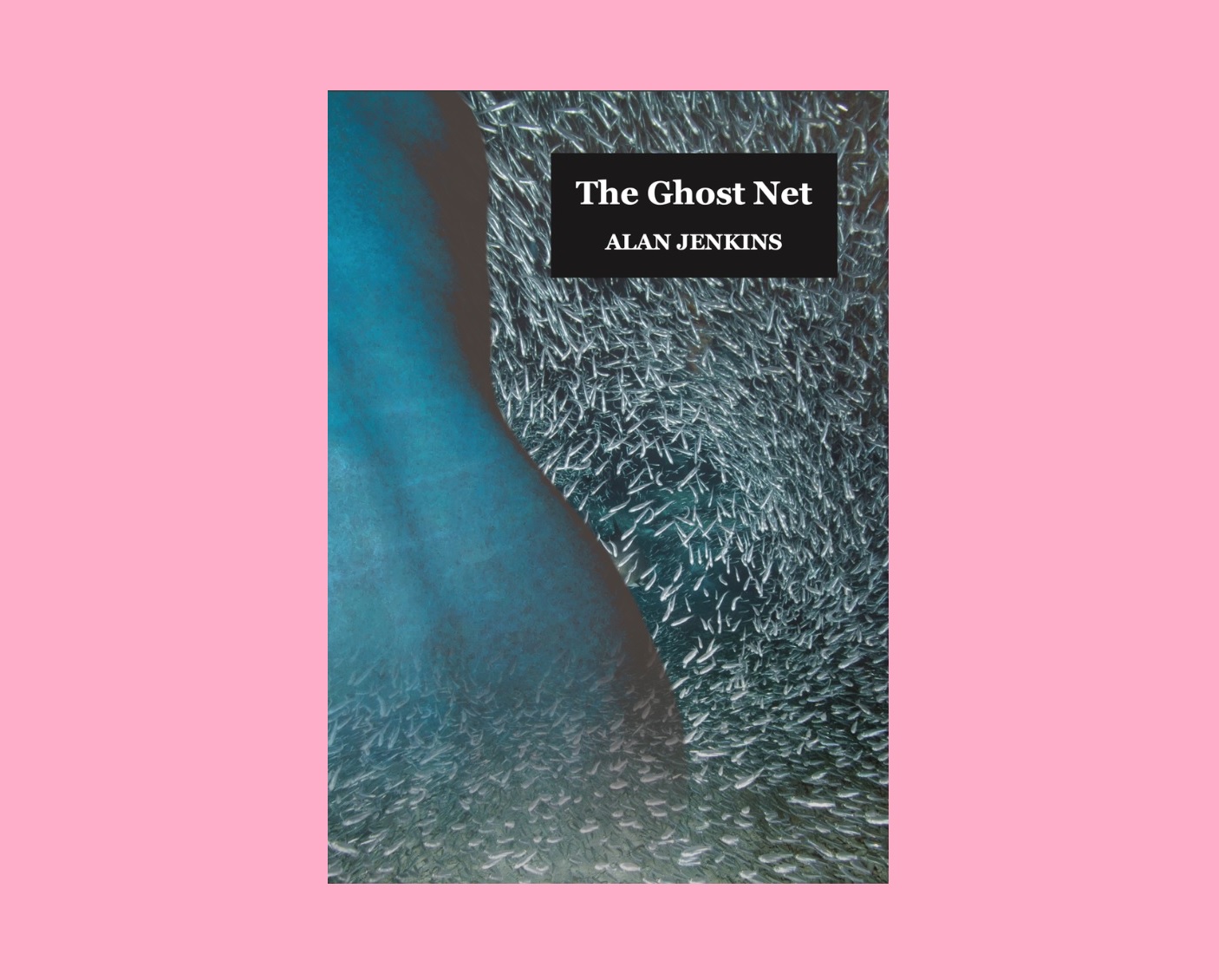
A Romantic two centuries late: ‘The Ghost Net’ by Alan Jenkins
Richie McCaffery The Ghost Net is Alan Jenkins’s eighth book-length collection and the first full collection from New Walk Editions, marking a very auspicious new venture for the press which began by producing elegant, quality poetry pamphlets and grew out of the much admired and missed poetry magazine, New Walk. From the collection title onwards…
-
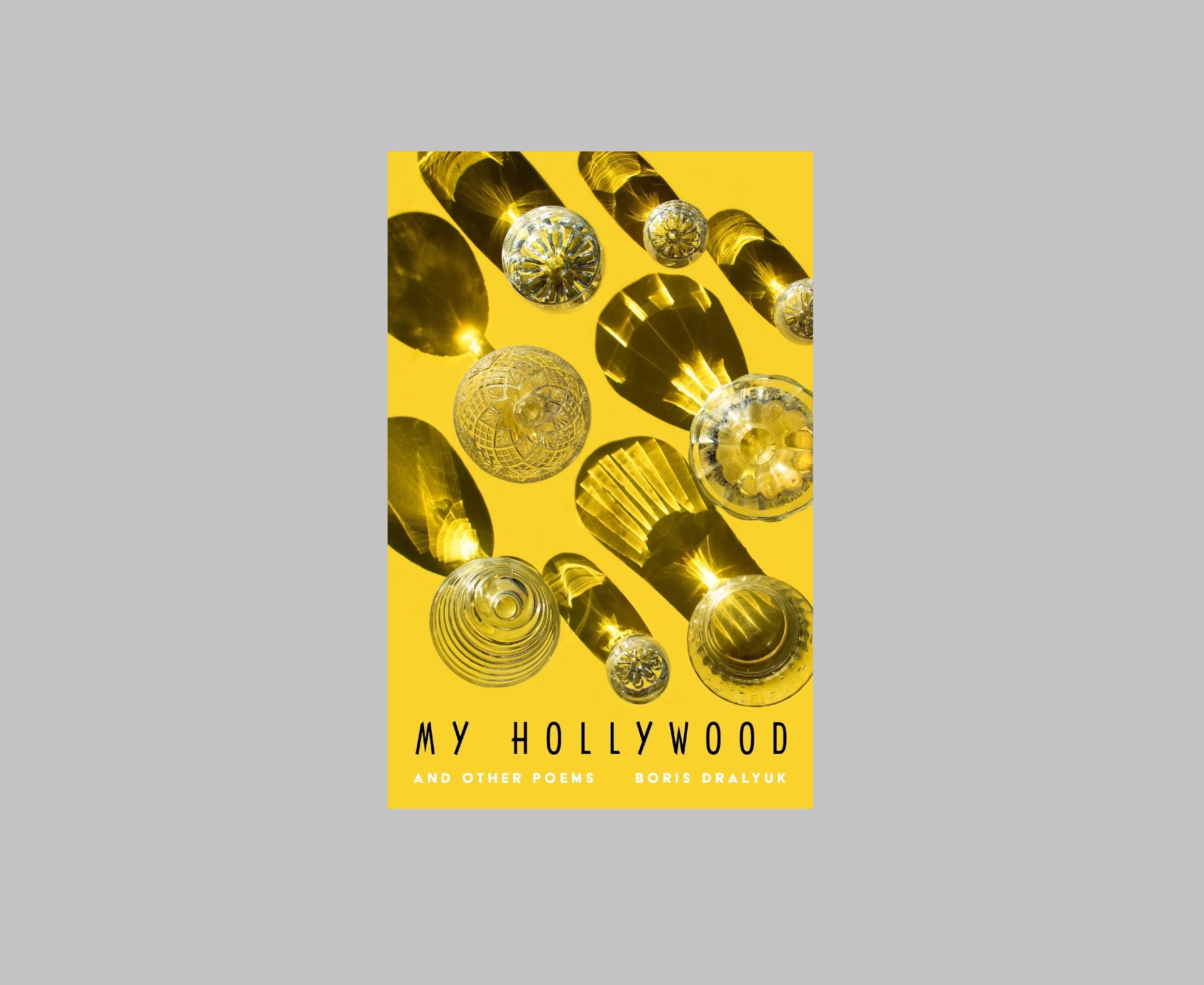
Memorable mastery: on ‘My Hollywood’ by Boris Dralyuk
Tom Branfoot Anachronism is a stylistic quality that governs translator and poet Boris Dralyuk’s debut collection My Hollywood and Other Poems (Paul Dry Books, 2022). In both form and subject – the dilapidated past of émigré Hollywood – My Hollywood is motivated by an interwar, formalist style that is objectively anachronistic. Dralyuk, born in Odessa…
-
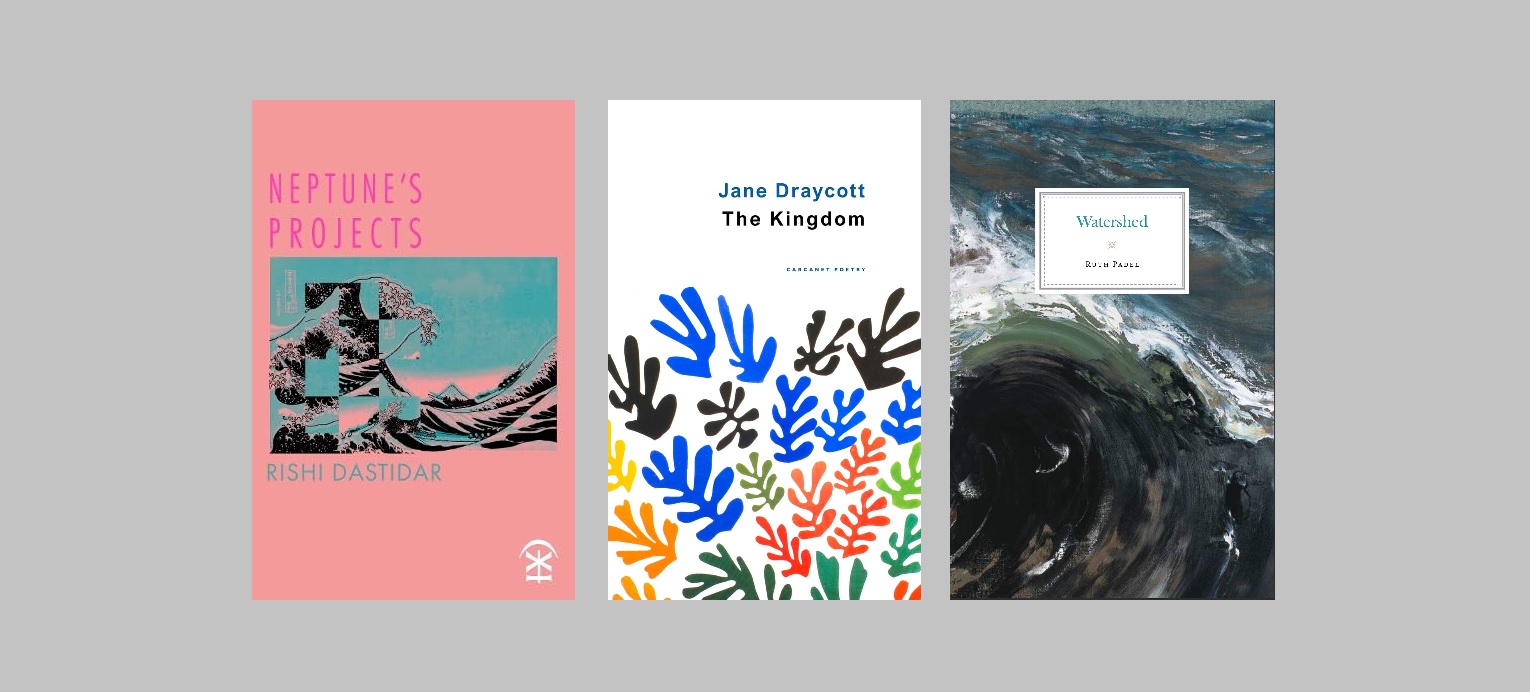
Kingdoms of Earth and Sea: on Rishi Dastidar, Jane Draycott, and Ruth Padel
Kevin Gardner Three new and seemingly distinct collections by Rishi Dastidar, Jane Draycott, and Ruth Padel join their voices in opposing the kind of exceptionalism that deludes nations and their leaders to the climate crisis and their own impending ruin, that continues to convince some that Britain was chosen to rule the waves. British exceptionalism…
-
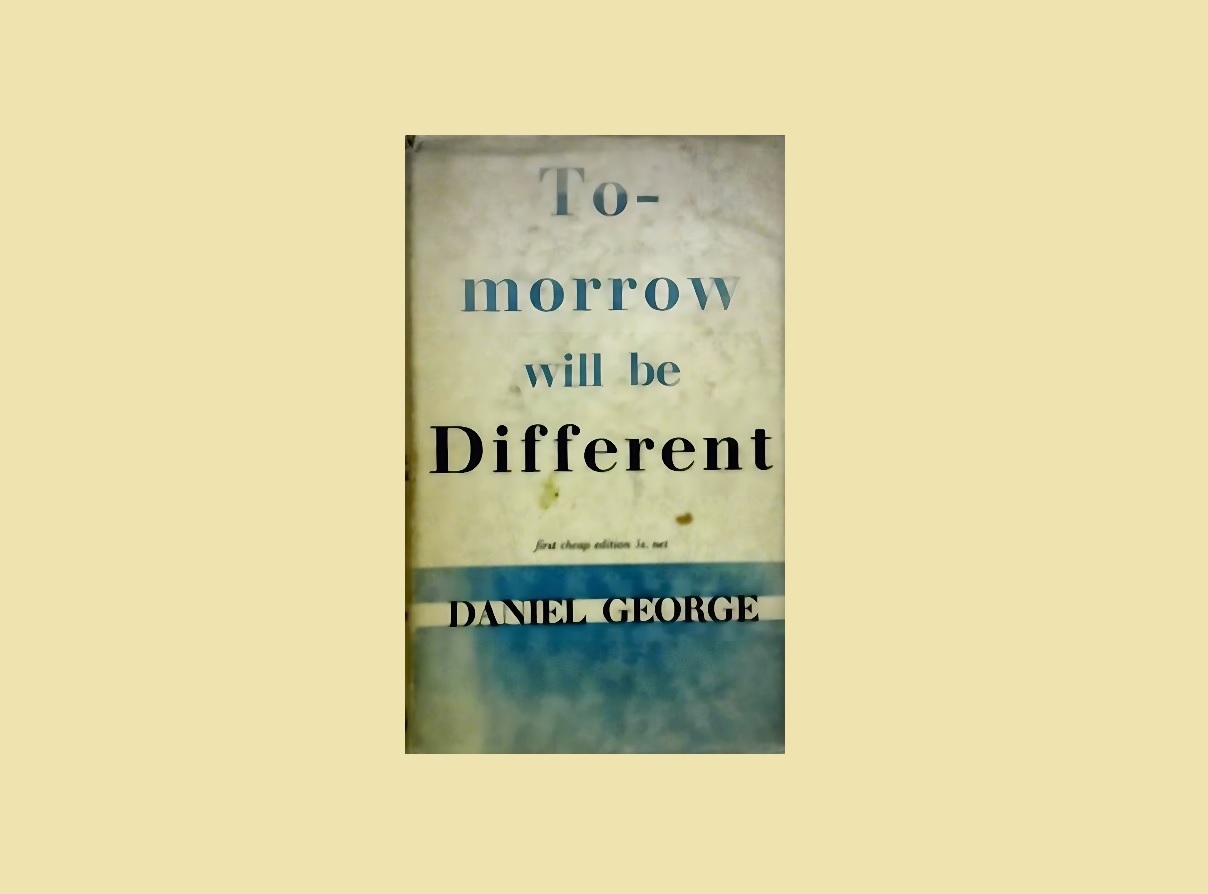
A Shilling Book from Praed Street: on Daniel George
Mark Valentine Daniel George (1890-1967) was the author of To-morrow Will Be Different (1932), a book-length narrative poem about a day in his life, getting up, bathing and shaving, going for a walk with friends, visiting the pub, then meeting at a cottage for tea. It is, as the epigraph quotation from Nathaniel Hawthorne’s Notebooks…
-
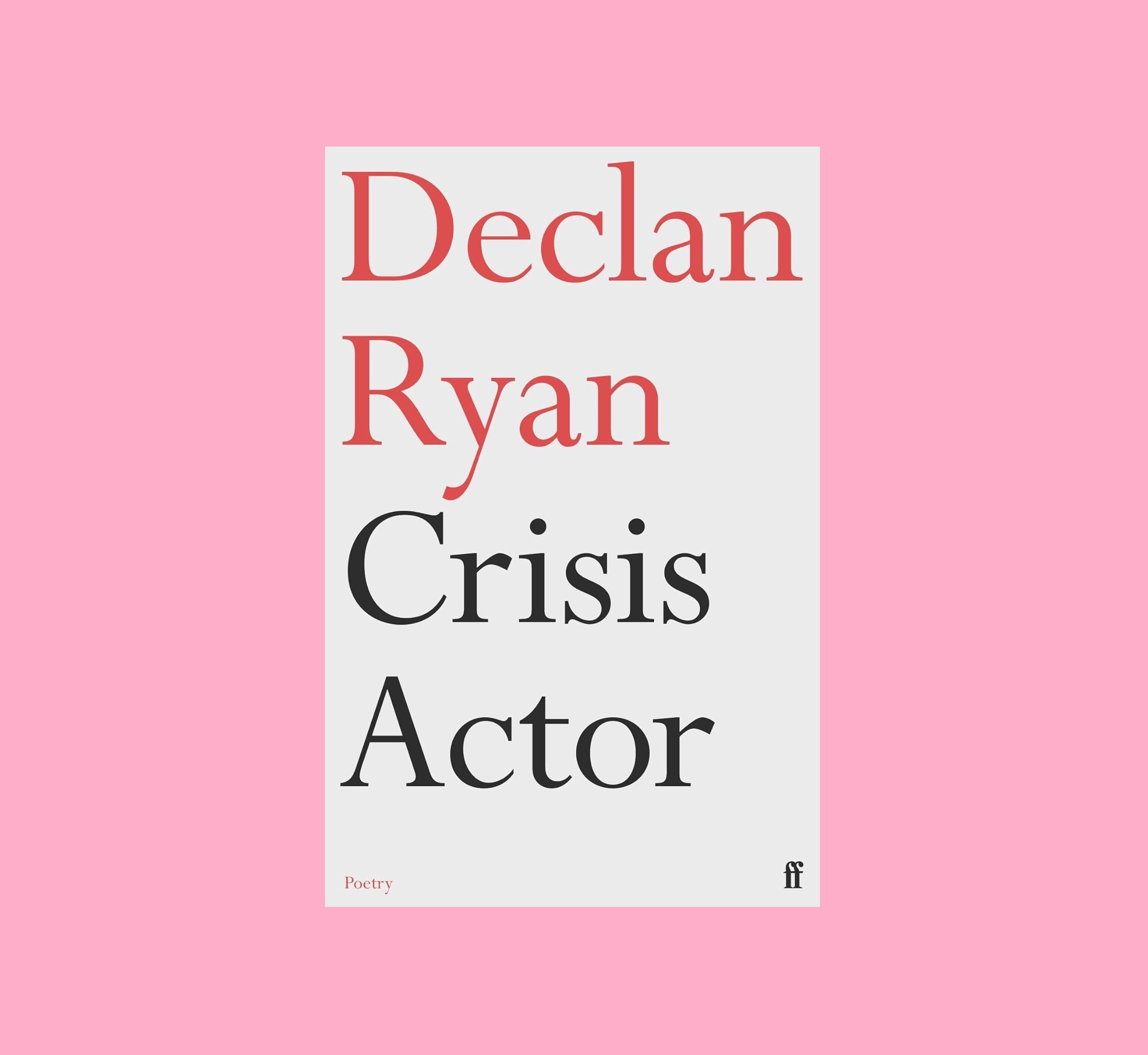
Toughness & tenderness: on ‘Crisis Actor’ by Declan Ryan
John Fuller How can we be prepared for all the difficult life-choices we may have to make? It’s a commonplace that there can be no rehearsal for life, since life has already begun. At the core of ‘Halcyon Days’, a beautiful love poem, and one of the longer and most philosophical in Declan Ryan’s very…
-
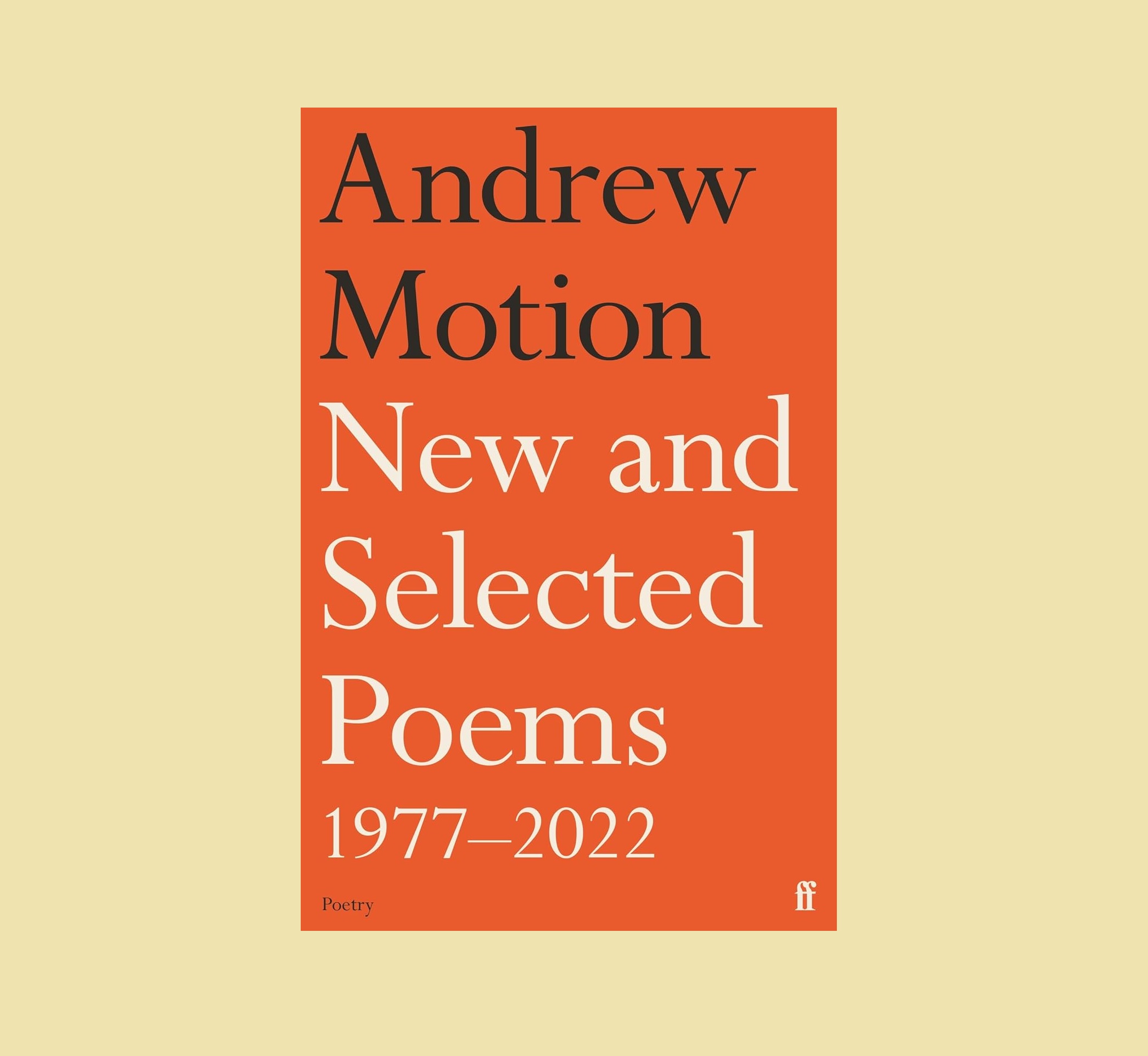
Wisdom joined with simplicity: on Andrew Motion’s New & Selected
Patrick Davidson Roberts It’s been twenty-five years since Andrew Motion’s first Selected Poems was published by Faber & Faber and for him personally, and for the world, a lot has occurred in the meantime. For him, there has been ten years as Poet Laureate, personal upheavals, professional successes, and a relocation to Baltimore. For all…