Daniel Bennett
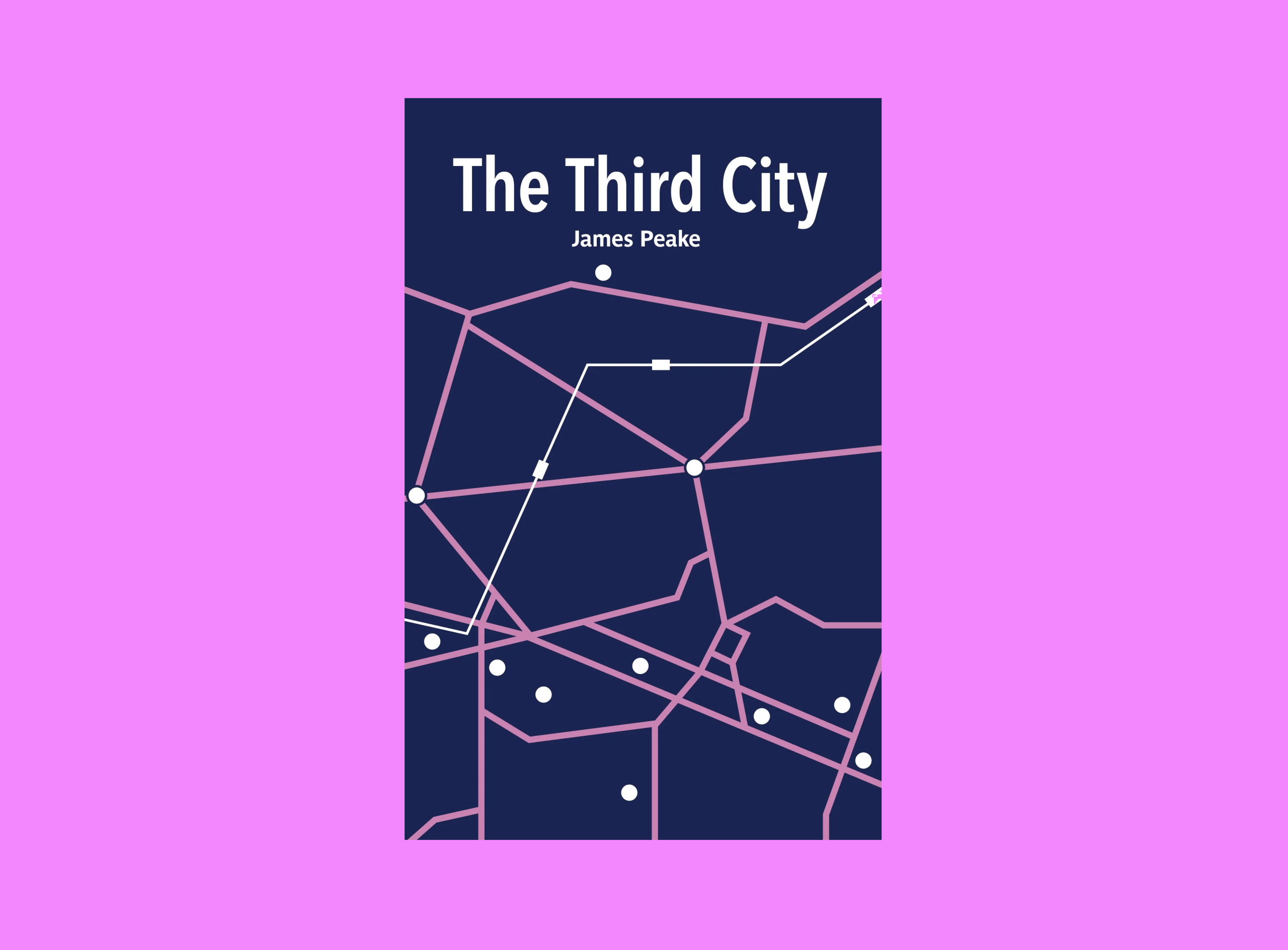
James Peake’s third book, The Third City (Two Rivers Press, 2025), is a short collection of around 40 pages, but it represents a fifteen-minute city of intimacy and history. I liked the use of the first person in the work here, the sliding sense of someone who is there but always ahead of you, ready to disappear around corners or dissolve into details of the titular city: the office chairs, the mannequins in a window. There are shades of D. Nurkse’s A Night In Brooklyn in the dream-like title poem, which opens the collection and sets the scene:
a city already compacted,
theirs, ours, maybe anyone’s
who cares the more, no slate being
clean – soot where a sign
has been taken down
The title of the collection insinuates the poems will put together the building blocks of a city with careful attention to a sense of place. And while a consideration of place exists, (‘the placeholder becomes the place,’ as Peake observes in ‘Zero in Europe’) the collection doesn’t labour place for place’s sake, fixing the work in a knowing, nerdy geography. This is the city as organism and the poems are always mutable and dynamic, flitting from the objective to the subjective in the treatment of themes.
In other places, it feels like some of Peake’s dynamic phrasing owes something to the Cambridge School poets, but while it sometimes felt that those poets ended up talking to the same faces, Peake feels more open, regarding of other potential audiences, ready as much to read a poem to a family member as the gang who meet every month in the room over the pub. If a poem feels as though it is closing itself off into an interior logic, it then opens into something more generous. And so we get moments of familial intimacy, a visit to a grandparent’s cottage, a poem for a mother, domestic insights which never drag into mawkishness. For all the dynamic shifts in phrasing and New Sentences, Peake is primarily a poet of the intimate, the small.
a paperweight
that shares a surface with a splayed paperback,
its ridged spiral sending out even as it tightens,
like a juicy thought.(from ‘The Anamnesiologist’)
There’s a pleasing playfulness to the language here: the sense that language and thought are in competition to create the logic of a poem, a ‘juicy thought’ evolving from the solidity of the ammonite. Fundamentally, Peake is a poet looking to find the feeling in the inanimate, that juice. We need poets like him to remind us that as well as seeking scale or associations, chasing the line, poetry remains an art of emotion. Heartbreak in brick, the kids running wild over the mannequin’s perfect home, the wooden horse in ‘What I Know About Feeling’: emotion lies under the surface of Peake’s structures.
I like to think that most poetry collections have the kernel poem at the centre, what other, less patient readers may call ‘the point’. ‘Zero in Europe’ is probably the most impressive of the poems here, for its sense of historical scale, but I’d nominate ‘What I Know About Feeling’ as that kernel poem, where Peake balances the various energies that drive the collection into something pithy and poised. The ‘feeling’ of the title refers to emotion, of course, but also that sense of spontaneous craft which drives so much of poetry, the inspiration feeding the lines. Distil this into poetics and you have Peake declaring:
They’re wrong who think I seek perfection.
I eliminate like a poet fails, maximum
coherence the box I’m trying to seal.
Somewhere one of the lines here spoils ‘the box’, turning 14 lines into 15. What is this maximum coherence? Probably the weight of history and contemporaneity, the seesaw of emotion and art. It’s all any of us try to do, really, and if we scribble over the lines in these boxes, turning a sonnet into a fifteen-line poem, then, so what?